Postcard: Saudade Mai Lan
美蘭
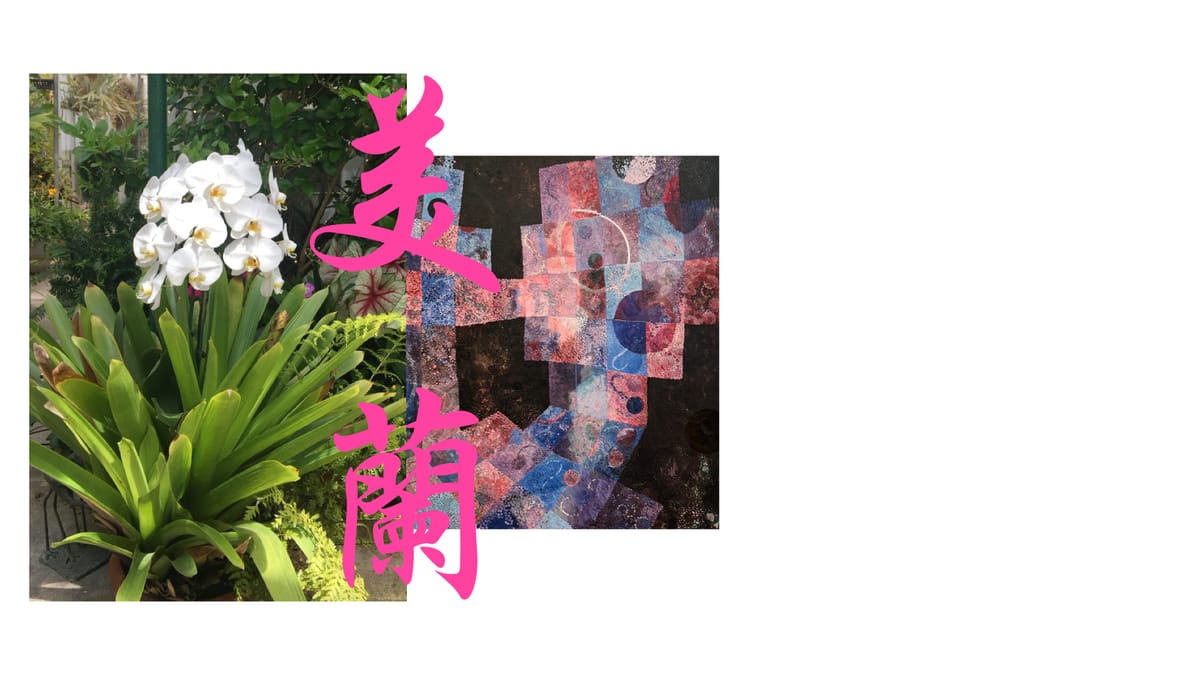
I’m waiting for takeout at a well-known Vietnamese restaurant in Honolulu.
A group of Japanese tourists, ten deep filing in. The owner greets them in fluent, cheerful Japanese, though every phrase carrying the tone of Cantonese. Jokes and banter flow, his voice warm, his phrasing precise though every syllable carries the tone of Cantonese. The tourists laugh, their order complete, the owner turns toward the kitchen.
He calls the dishes in rapid Vietnamese, the cooks in the back nodding without pause, he swivels back to me in English:
“Ten more minutes.”
I nod. But curiosity pulls me forward. In Japanese, I ask him where he learned to speak so well.
He begins.
He was born in Vietnam, but raised in Hong Kong. Trained as a chef there, he once met a Japanese girl, daughter of a Seiko watch salesman, traveling with her family. He smiles faintly as he recalls it, it was instant. The days unraveled into a whirlwind.
When she returned to Japan, long-distance calls in the 1970s were horribly expensive. So he began to study Japanese intensely. Already grounded with Chinese characters, he advanced quickly, he wrote her love letters, she responded in kind. Occasionally they spoke on the phone, bridging seas with voices, the current of love steady between them. He worked in kitchens, climbing and saving through the ranks, dreaming of moving to Japan, or her of coming to Hong Kong again.
I share the saying with him: the best way to learn a language is with a bedroom dictionary. He chuckles and nods in agreement.
But the dream ended.
“One day,” he tells me, “she wrote to say she was marrying a man her parents had chosen. ”
His voice dips.
“You see in that era, it wasn’t so easy, you had to listen to your parents. Not like now.”
He cried for a month. His Japanese was nearly fluent by then. Broken, he says.
Later he traveled to Japan, tried to see her, to win her back.
The door was closed.
Broken further.
I ask him if he ever heard from her again.
“No,” he answers with eyes down.
“And who did you marry?” Presuming I ask.
He slouches a bit, his voice soft, a nice Chinese girl, he says. Two kids and a full life later. He’s hoping now for grandchildren. On the wall behind him hangs a calendar with a photo of his daughter, his pride breaking the sadness for a moment.
I ask him how he came to Hawaii. He smiles, the bell rings, the cooks slide my order through the kitchen pass.
“Another time” he says.
He places the bag in my hands, a business card laid on top.
美蘭 Mai Lan
Beautiful Orchid.
I smile at the name. Knowing the meaning it carries.
He turns back to the dining room, shoulders slightly stooped. Balancing glasses of beer for the Japanese tourists, a mask of cheerfulness. But I see it — the longing irradiating the room.
I pass the wall of Japanese celebrity photos, postcards, yellowed newspaper clippings.
Takeout in hand. I wave a shaka back at him.
Stories everywhere. Deep, if you listen.
Saudade Mai Lan
美蘭 — Beautiful orchid, indeed.